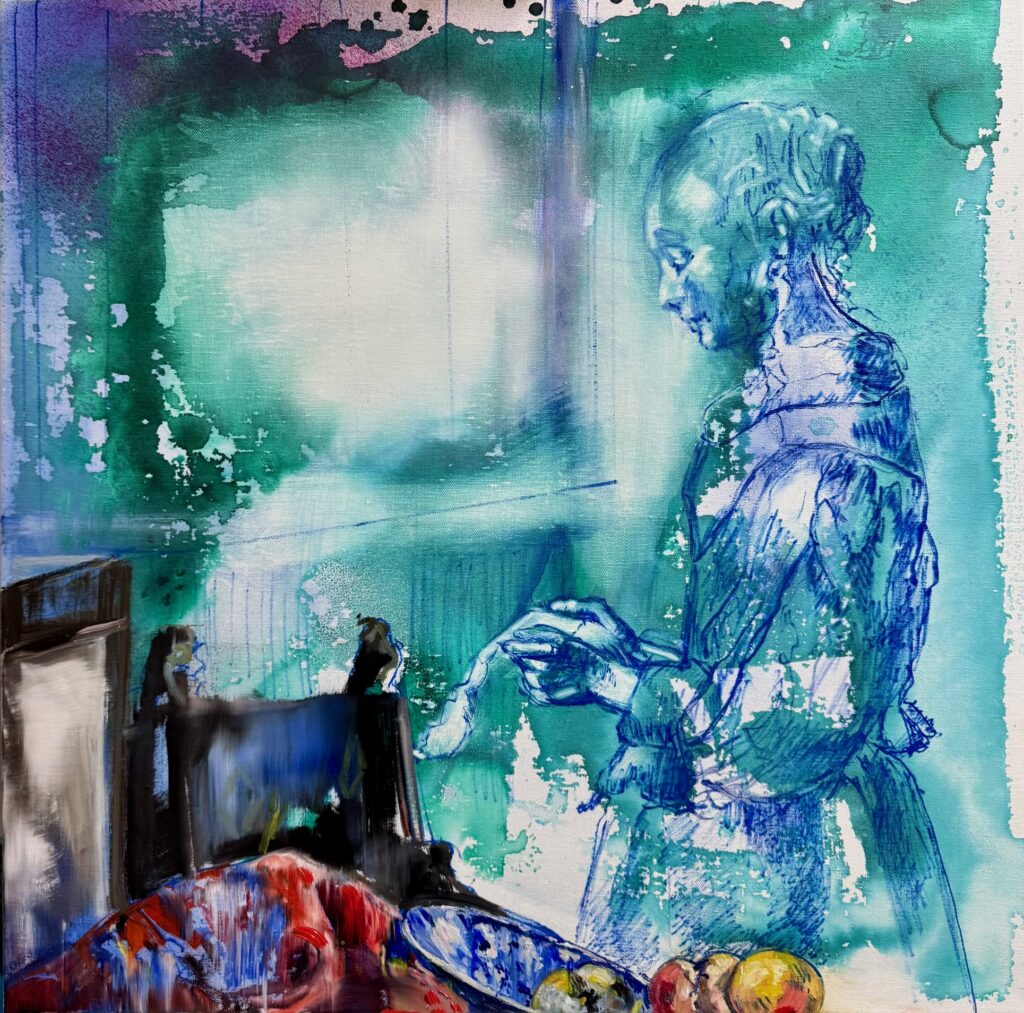
Girl Reading a Letter at an Open Window, 80 × 80 cm, ink, marker, oil on canvas, 202
My work is a contemporary reinterpretation of Johannes Vermeer’s Girl Reading a Letter at an Open Window. While Vermeer conveys tranquillity and inner contemplation, I detach the figure from its historical context. Colour, transparency and fragmentation create space for contemporary sensations such as memory, uncertainty and emotional movement. The letter remains a symbol of the inner self, while the window becomes a transition between past and present.
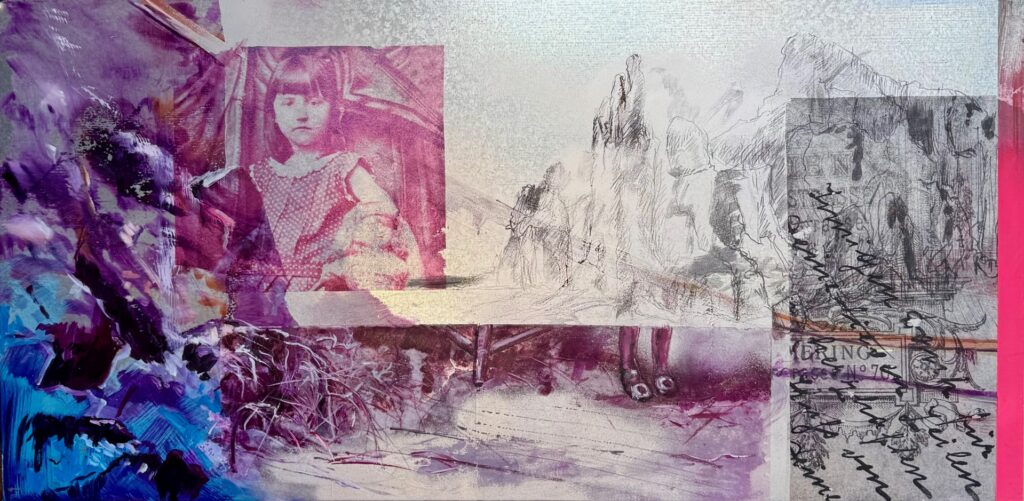
Heartfelt thanks for!, 50 x 100 cm, oil on galvanised sheet steel, 2025
The image appears like a multi-layered collage of memories. The central figure of the girl from a historical photograph contrasts with the abstract areas of colour and fragmentary drawings. Painterly gestures, scratch marks and overlays create a tension between representationalism and dissolution. The hinted landscape in the background opens up an inner, almost dreamlike space. Overall, the work addresses transience, memory and the fragility of personal and collective history.
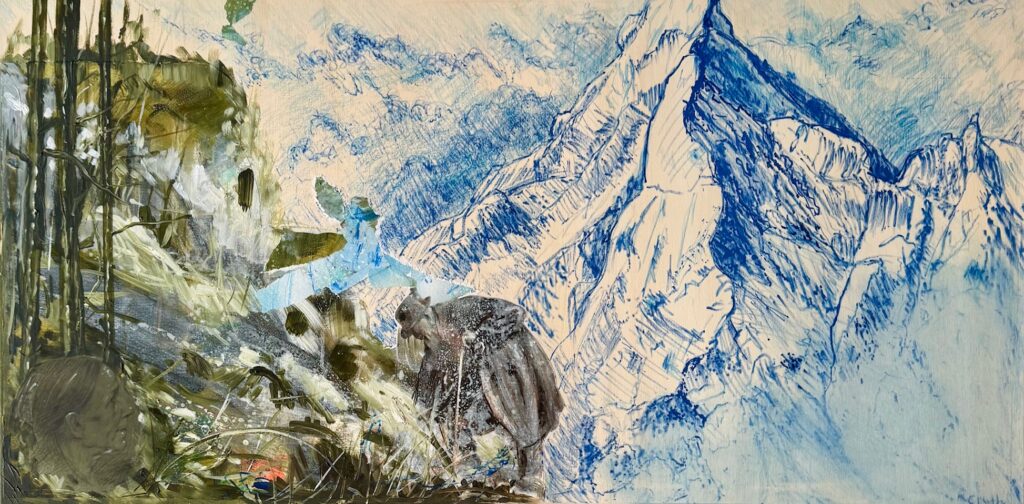
Souvenir, 50 x 100 cm, oil, marker on wood, 2025
The image unfolds like a layer of memory. On the left-hand edge, the woman appears only fragmentarily, almost transparent. Her gaze is directed inward, toward her deceased husband, who does not appear as a clearly defined figure, but as a trace, a presence in disappearance. He is embedded in the material. It is about a life lived in Gruyère: work, closeness, deprivation, silence. The inspiration from photographs of the original inhabitants of the Maison des Fées in Charmey is palpable as an attitude, not as an image. In the background, the Swiss Alps rise up, sketched and drawn in blue. They stand for constancy and at the same time for the immutability of the past. Landscape and figures intertwine, memory and present overlap. The image tells of grief without pathos and of a quiet continuation of life with the absent. The Maison des Fées appears as a symbolic space of memory in which people, history and landscape are inextricably linked.
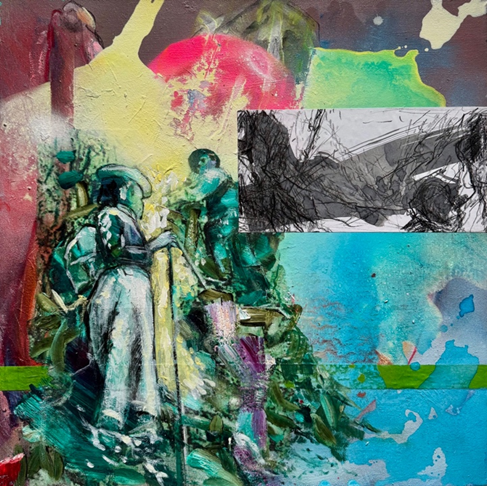
Mountaineer around 1890, 50 x 50 cm, oil, ink on canvas
The figures are moving across steep, rocky terrain, apparently with only the most basic equipment. The rugged mountain landscape is depicted alongside the quiet determination of the figures. The image is reminiscent of early alpinism and the courage of those women who, even back then, made their way into the high Alps without much safety equipment and in everyday clothing. It stands for a spirit of discovery, a willingness to take risks and the desire to push boundaries.
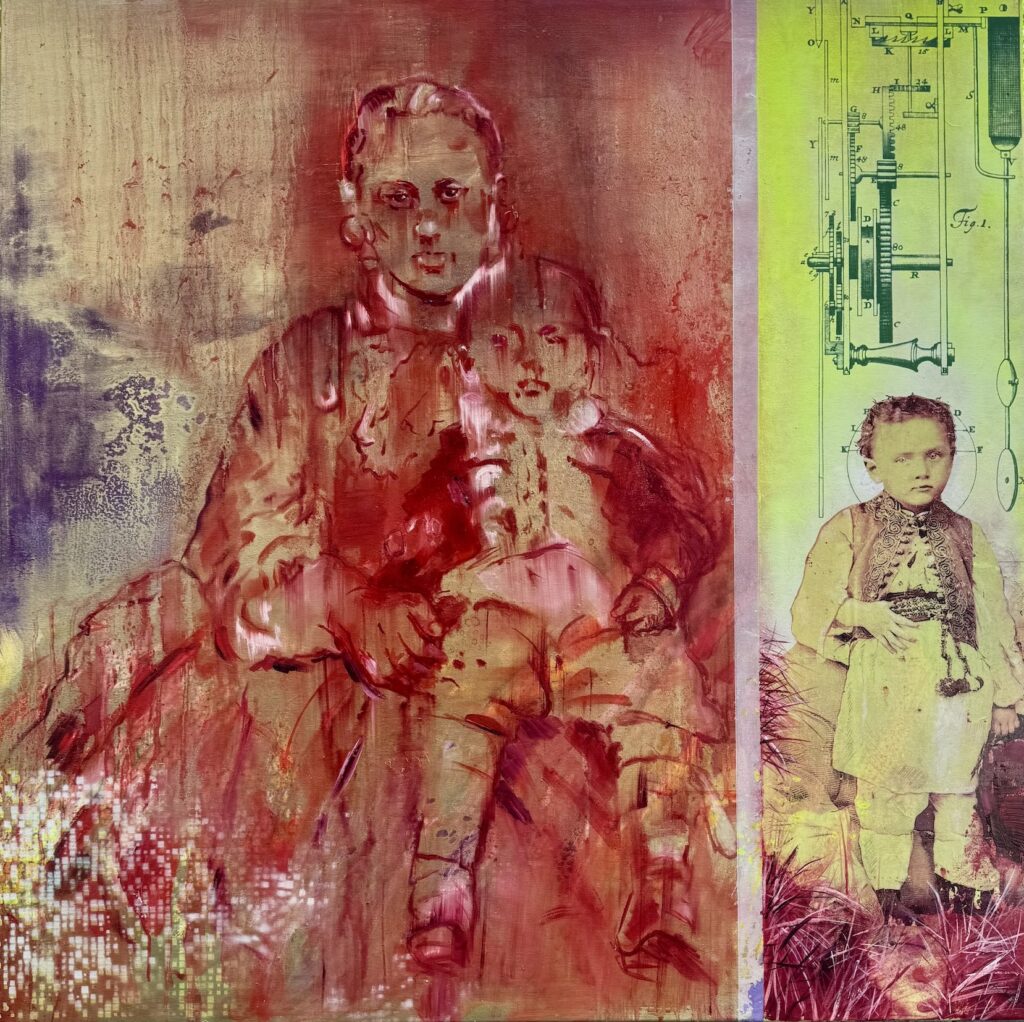
How Far Does Hope Carry Us?, I., 100 x 100 cm, oil, ink on canvas, 2025
The painting ‘How Far Does Hope Carry Us?’ combines grief, memory and hope. It draws on the tradition of Victorian post-mortem photography, which served as precious final mementos in the 19th century. In shades of red, it shows a seated woman in a Victorian dress with a child on her lap. Her frozen gaze reflects pain and inner emptiness, while small reflections of light in her eyes hint at a quiet spark of ho
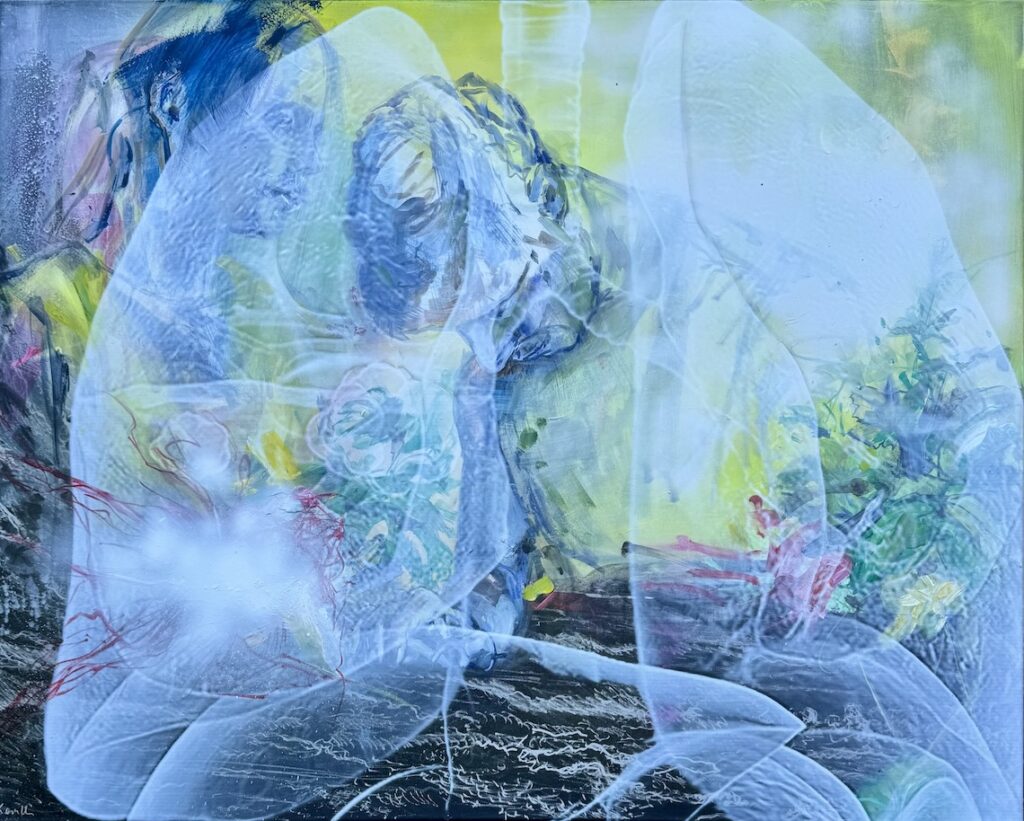
How Far Does Hope Carry Us? ,II., 80 x 100 cm, oil, ink on canvas, 2025
The image depicts a farewell scene, as seen on Greek funerary steles, in which parting and transition are staged in a quiet and solemn manner. At the same time, the depiction takes up the motif from Edvard Munch’s The Sick Child and refers to illness, vulnerability and existential suffering. In the foreground is a lung with metastases, which transfers the theme of transience and death to a concrete medical level. The image thus combines ancient pictorial traditions, modern art and contemporary representations of illness to create a multi-layered symbol of farewell.
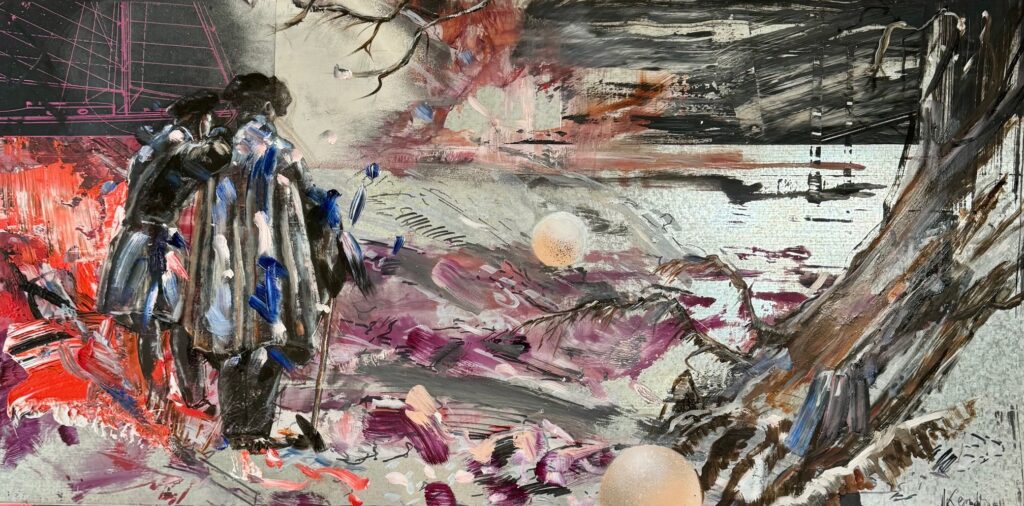
The painting takes up the romantic motif from Caspar David Friedrich’s ‘Two Men Contemplating the Moon’ and translates it into a modern, expressive visual language. The figures represent the observing human being and invite reflection. The landscape appears fragmented and restless, while the moon remains a symbol of longing, yet appears distant and enigmatic. The work thus sees itself as a contemporary continuation of Romanticism, in which nature no longer appears as a harmonious retreat, but as a mirror of inner and social tensions.