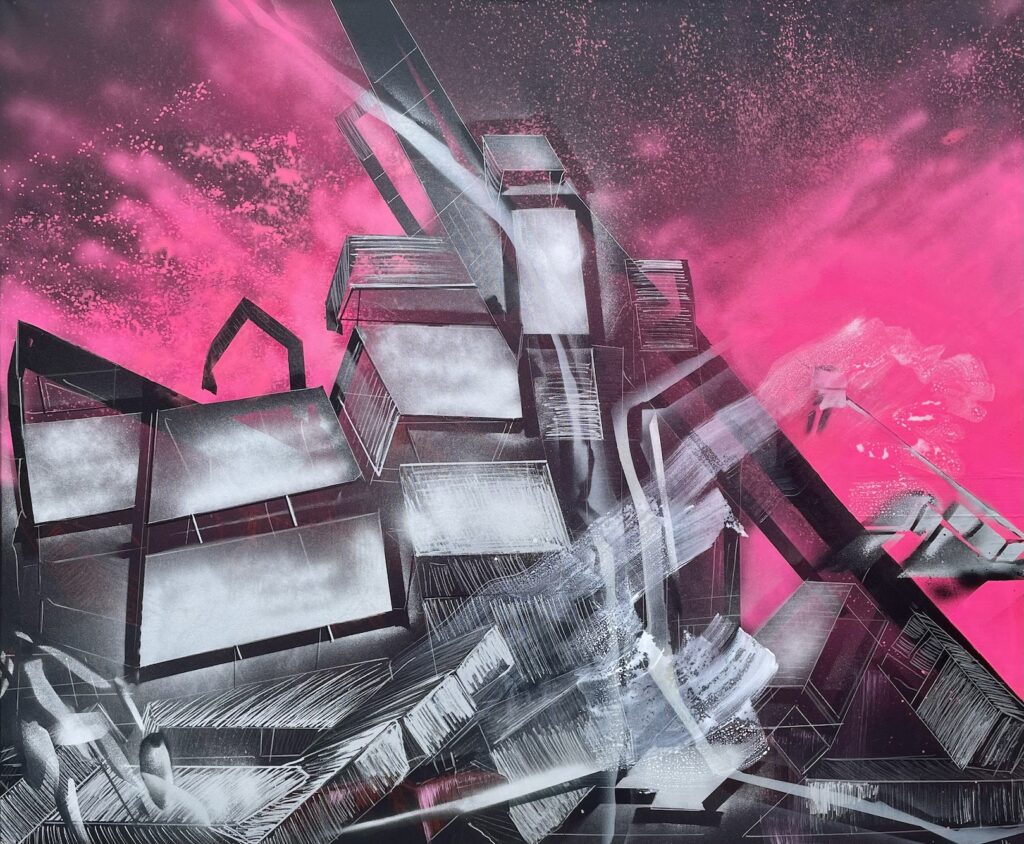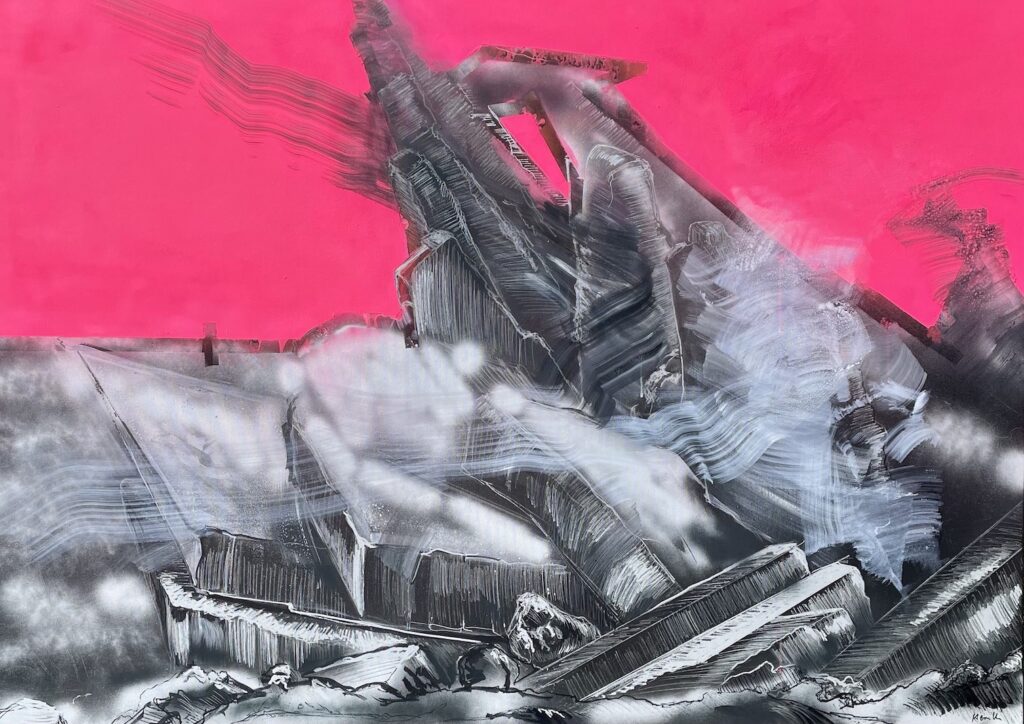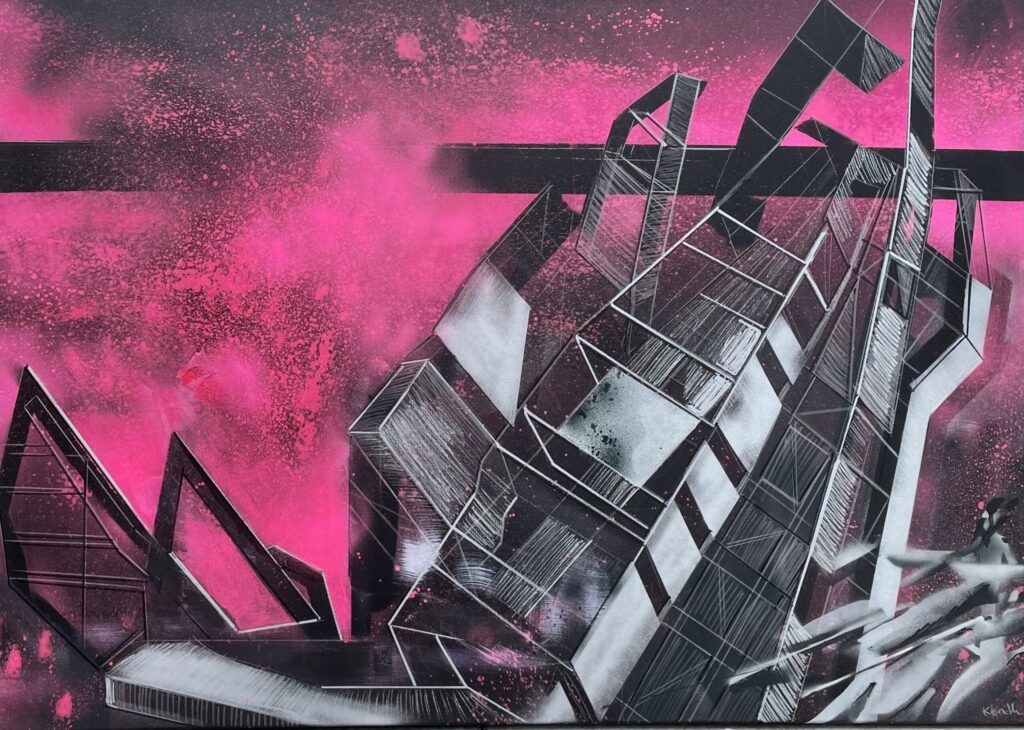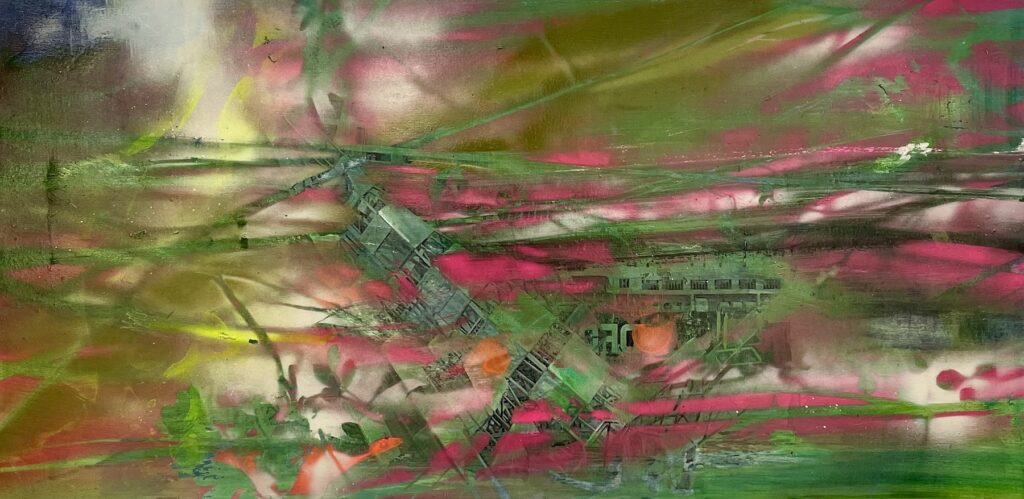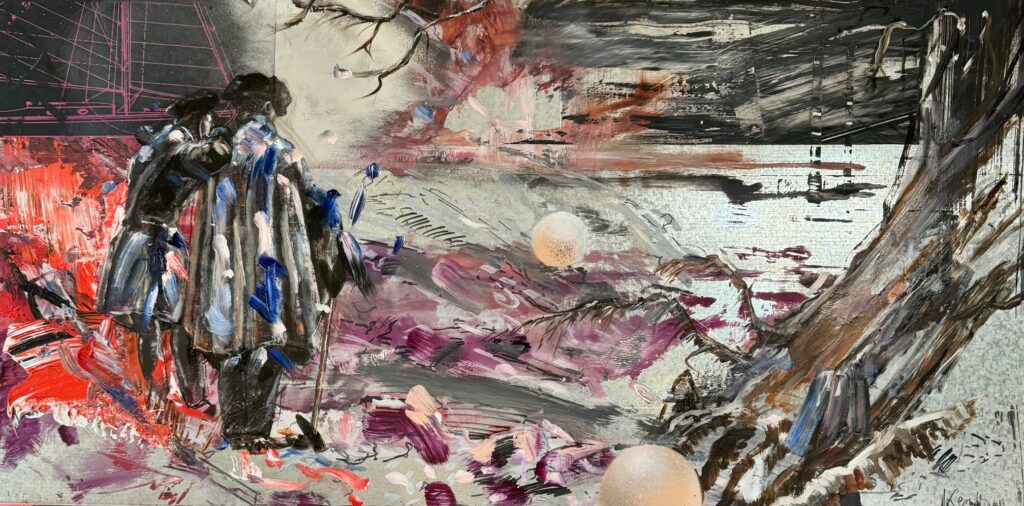
Two Men Contemplating the Moon, 50 x 100 cm, oil, ink on zinc plate, 2026
The image takes up the romantic motif from Caspar David Friedrich’s ‘Two Men Contemplating the Moon’ and translates it into a modern, expressive visual language. The figures represent the observer and invite reflection. The landscape appears fragmented and unsettled, while the moon remains a symbol of longing, yet appears distant and enigmatic. The work thus sees itself as a contemporary continuation of Romanticism, in which nature no longer appears as a harmonious retreat, but as a mirror of inner and social tensions.
The lost Caspar David
In the series of works, she teases out the area of tension between nature and human freedom. The artist uses the iconic work of Caspar David Friedrich The Arctic Ocean as a pictorial quotation. In doing so, she is interested in the confrontation of aesthetics between the beautiful and the sublime. Particularly in the current global discourse on man-made climate change, these images make us aware of man’s smallness in the face of elemental forces and, at the same time, their perceived impactfulness.